

Why Your Watch Slides on Your Wrist (And How to Fix It Without Removing Links)
Is your watch sliding on your wrist even after resizing? Learn why metal bracelets shift, how micro-adjustments fail, and the simple way to achieve a perfect fit without removing links.
Introduction
Few things are more frustrating than a luxury watch that won’t stay put. You size the bracelet, remove links, adjust the clasp—yet the watch still slides, rotates, and never quite feels locked in. Not only is it uncomfortable, but it throws off the way the watch looks, causes the crown to dig into your hand, and can even pull arm hair.
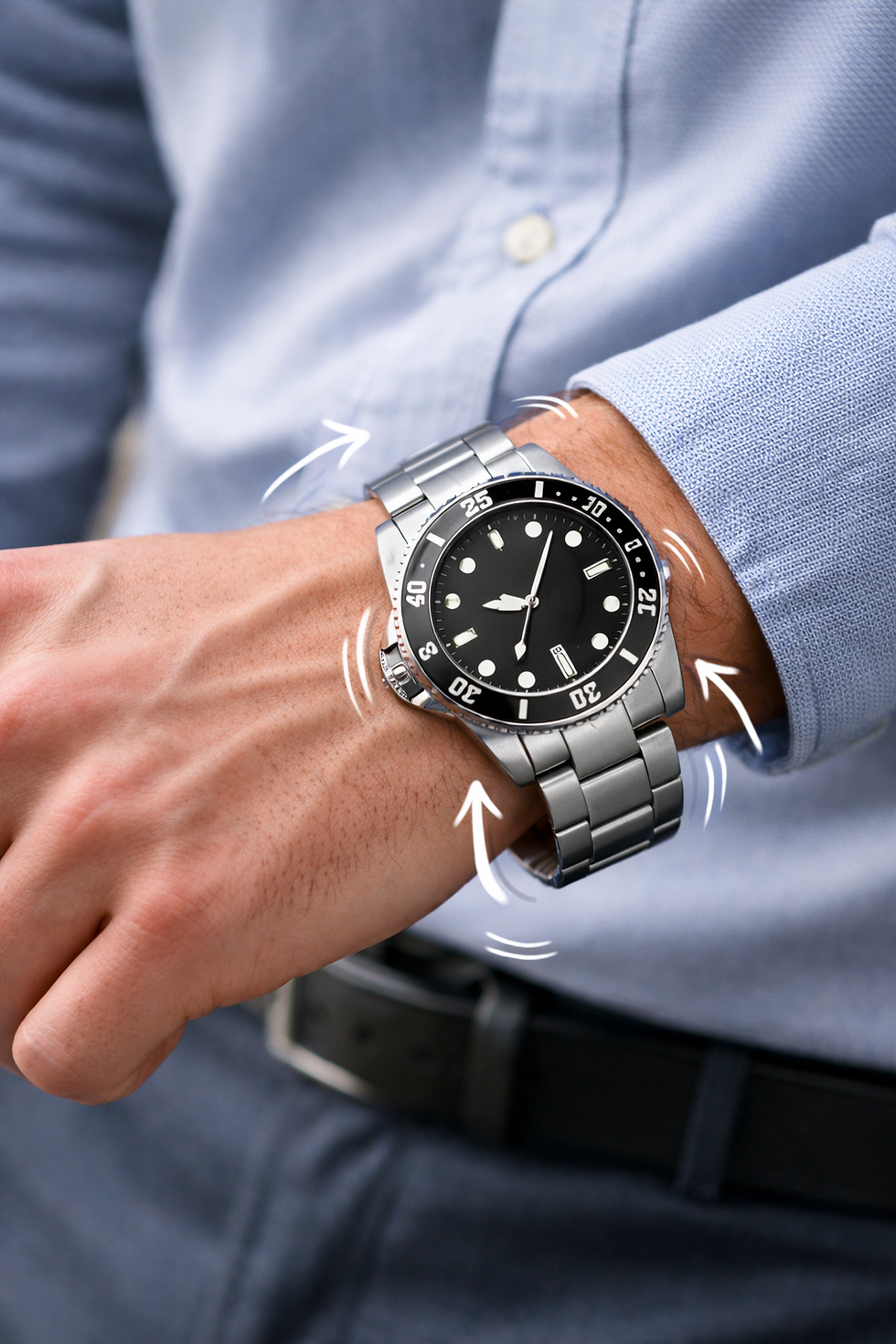
If your watch is almost perfect but just slightly loose, you’re not alone. And the good news is: you don’t need to permanently resize your bracelet to fix it.
Why Watches Slide Even After Resizing
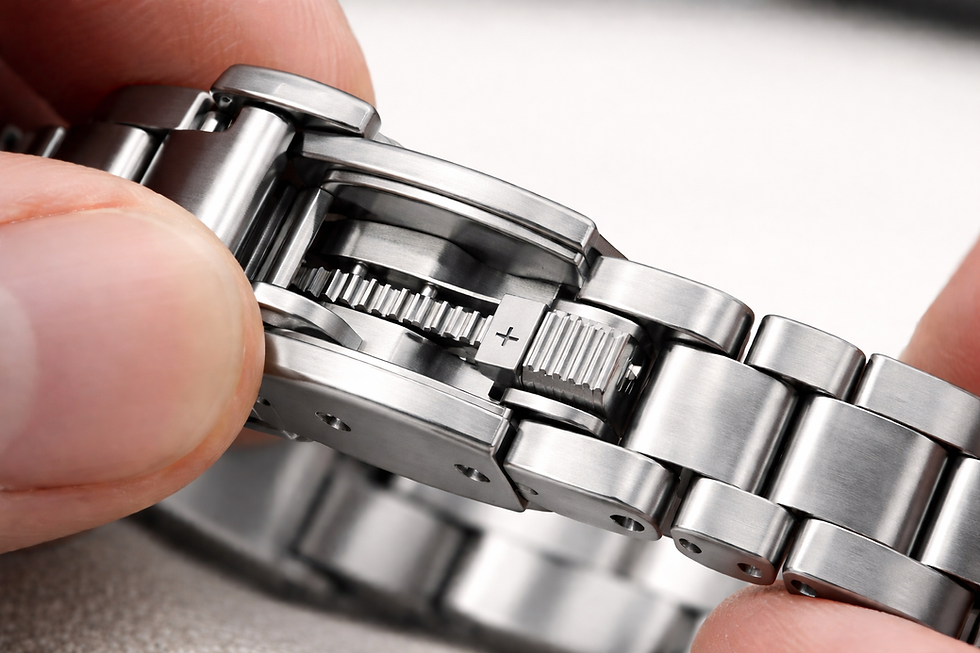
Metal bracelet watches are rigid systems. They’re adjusted in fixed increments:
Full links
Half links
Micro-adjust holes in the clasp
Human wrists, however, aren’t rigid. They change size throughout the day due to:
Temperature
Hydration
Activity level
Wrist bone shape

That means you’re often stuck between sizes. Remove one more link and the watch becomes too tight. Leave it as-is, and it slides.
Why Common Fixes Don’t Fully Work
1. Removing Another Link
Too tight, restricted blood flow, uncomfortable in warm weather.
2. Micro-Adjusting the Clasp
Helpful, and best option for keeping the original watch band, but still limited to preset spacing. Many watches don’t have micro adjustments as an option, and even with them as an option, your wrist may change throughout the day.
3. Switching to Rubber or Leather
Comfortable and constantly adjustable, but you lose the look, weight, and feel of your original steel bracelet.

The Simple Solution: Watch Adjustment Cushions
Instead of removing links, you can eliminate the empty space with cushions that act as a more comfortable alternative than micro-adjustments.
Low-profile cushions are applied discreetly to:
The caseback
Inside the bracelet links
Under the clasp

This creates:
A snug, custom fit
No rotation
No sliding
No crown pressure
No hair snagging
All while keeping your original bracelet fully intact.
Perfect for Oyster-Style Bracelets
Oyster bracelets, with their flat solid links and solid clasp, are ideal for long-term adhesion for this type of micro-fit tuning. The cushions nest perfectly inside the geometry of the bracelet, making them invisible from the outside.
The Result: A Watch That Feels Custom-Fitted
When the empty space is gone:
The watch stays centered
The weight is evenly distributed
The bracelet stops shifting
The watch feels more secure

It’s the difference between “close enough” and “dialed in.”
Final Thoughts
If your watch slides, it’s not a sizing mistake—it’s a spacing problem. And spacing problems don’t require permanent modification. They require intelligent, reversible micro-adjustment.
That’s the philosophy behind Linx Watch Accessories:
Perfect fit. No resizing. No compromise.


Comments